GNU Radio Companion - Frame Sync Example

Prepared by Dr. Aaron Scher
[email protected]
Oregon Institute of Technology

Back to Aaron's home page.
Back to My collection of GNU radio companion flow graphs.

(Last updated: Sep 2016)

Download file: Frame_Sync_Example.grc.

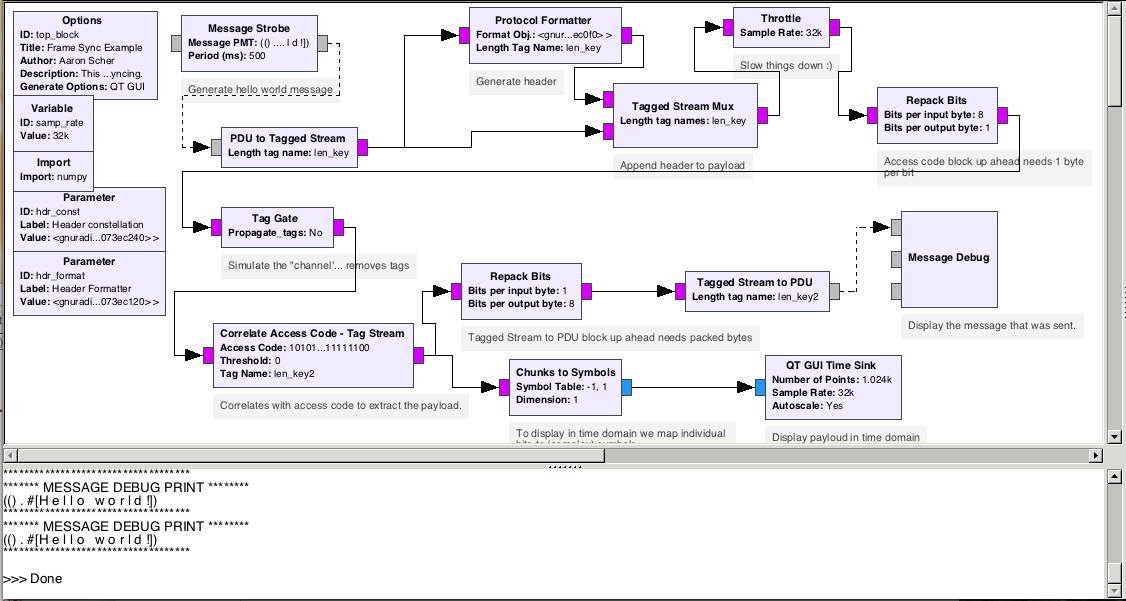
This flow graph shows a simple way to perform frame synchronization in GNU radio. It does the following:

  1. Generates a repeating "Hello World!" text message using the Message Strobe block.
  2. Converts this text message to a tagged stream. This text message is our payload that we want to transmit and recover.
  3. Uses the Protocol Formatter block to create a header. The header format is: digital.header_format_default(digital.packet_utils.default_access_code, 0). More information about digital.packet_utils.default_access_code can be found in the following link: gnuradio.digital: Packet Utilities
  4. Appends the header to the payload using the Tagged Stream Mux block.
  5. Sends the data through a "channel". In this case, the channel is simply the Tag Gate, which removes all tags from our data stream.
  6. Key step: Uses the Correlate Access Code - Tag Stream block to frame sync and extract the payload.
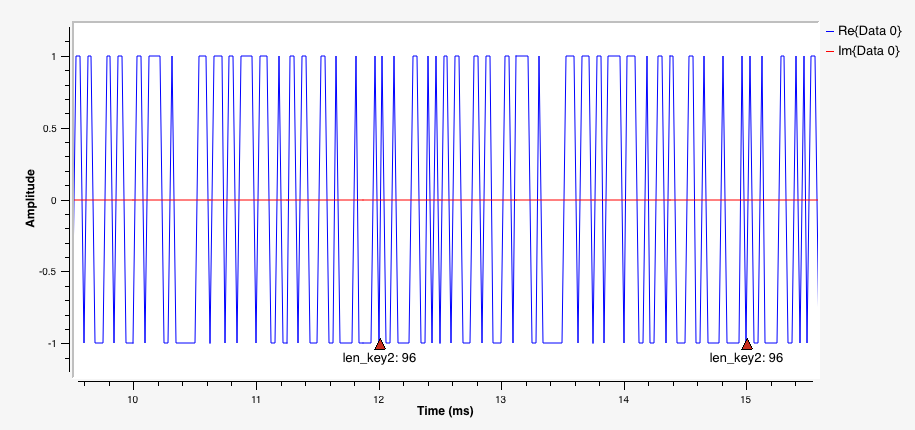
  7. Displays the payload as text. We recover "Hello World!"

Screen shots:

hello world

hello world